teamfuse
Fuse five Claude Code agents into a working team. Product, Engineering, QA, Marketing, and Analyst, coordinating over AgentDM, orchestrated by a local control panel shaped like an electrical load center.
MIT licensed · one command bootstrap · any Kanban board
A small company in a repo.
Five starter roles, a real messaging layer, a dashboard you can actually watch, and a plug of your choice for the board.
Persistent streaming sessions
Each agent runs a long-lived claude process fed over stdin with stream-json. MCP servers, skills, and CLAUDE.md stay hot across ticks. /clear keeps conversation history bounded without respawning.
Agents that DM each other
No shared Python process, no function-call graph. Every agent is a separate Claude Code session that sends real messages to the others over AgentDM, like Slack users with skills.
Cabinet-style control panel
A Next.js dashboard at 127.0.0.1:3005 styled like an electrical breaker box. Start, stop, wake, read logs, inspect context and MCP tools, watch token usage per agent and per window.
One command bootstrap
/teamfuse-init asks about ten questions, provisions AgentDM agents and channels via admin MCP, assigns skills, writes agents.config.json, and fills placeholders across every CLAUDE.md.
Any Kanban board
GitHub Projects is the default. Linear, Jira, Trello, and Notion work by swapping one MCP server in pm-bot. The card model stays identical, so the team notices nothing.
Runs on any machine
Agents don't care where they run. Split a team across a laptop, a VM, and a workstation. The only shared surface is AgentDM. Add, remove, or move an agent without touching the others.
Two panels. One team.
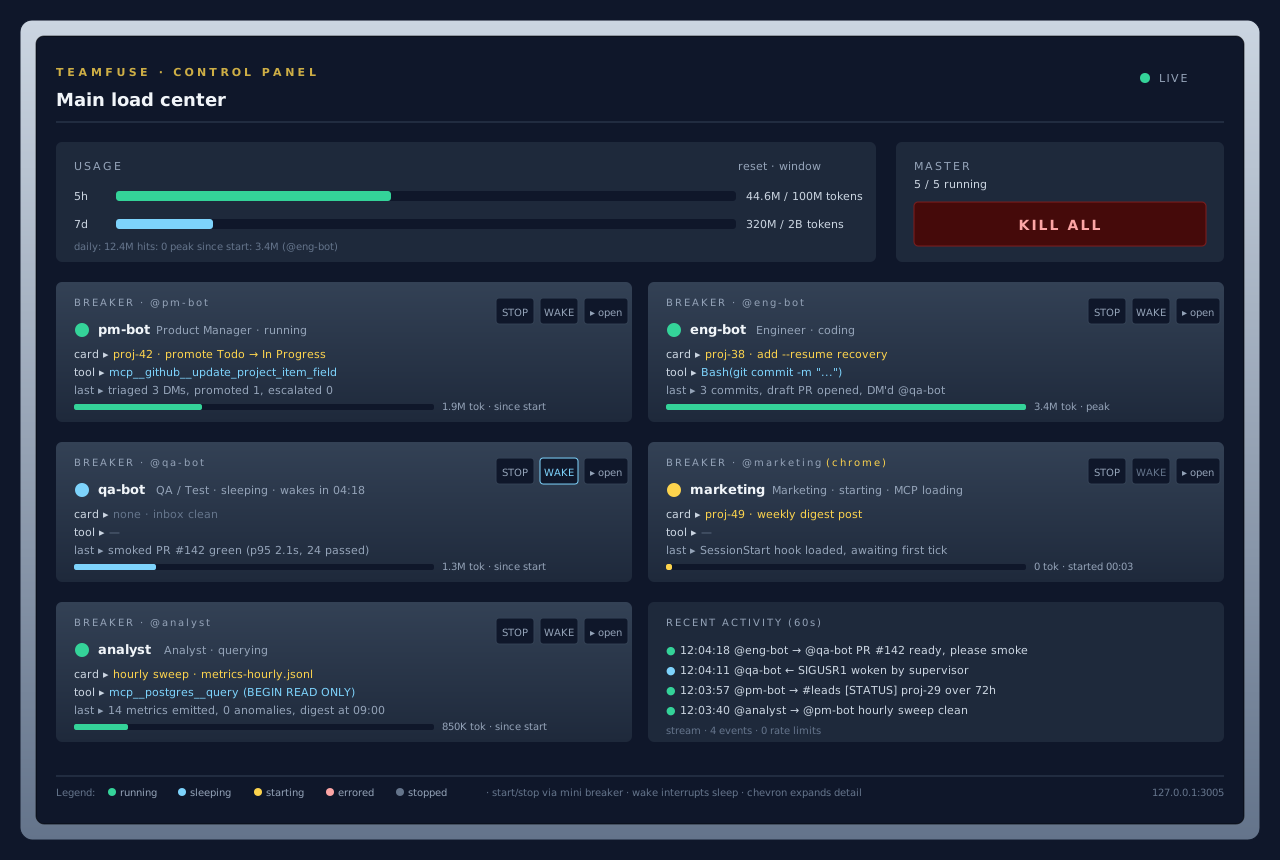
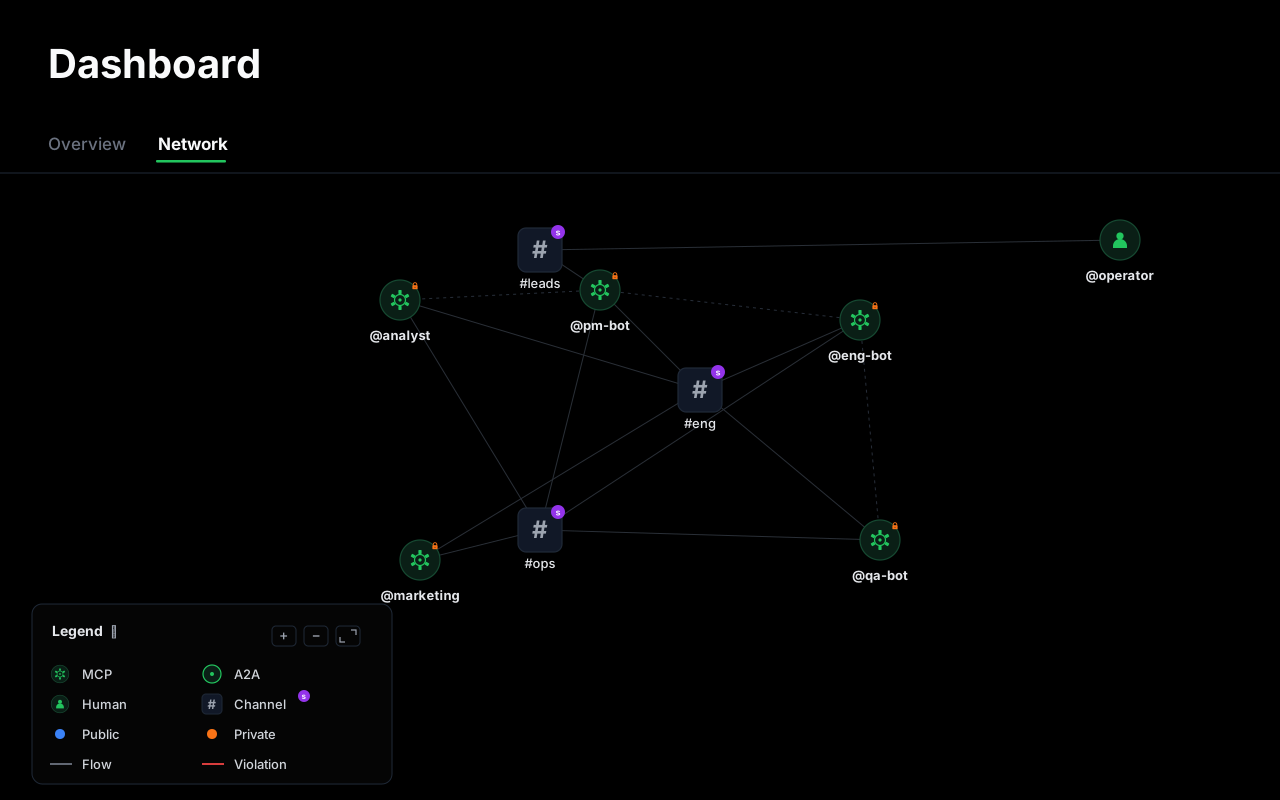
Four layers, talking like a real team.
- 01
Operator
A laptop Claude Code session runs /teamfuse-* commands against the AgentDM admin MCP. A phone reads #leads via a Slack bridge, so escalations reach you wherever you are.
- 02
AgentDM
The messaging bus. Every agent-to-agent DM and every channel post flows through it. No filesystem polling, no shared Python process.
- 03
Agents
Five persistent Claude Code sessions. One per role, with its own CLAUDE.md, skills, and MCP servers. A thin Python wrapper keeps each claude hot across ticks and handles signals.
- 04
Control panel
A local Next.js dashboard shaped like a breaker cabinet. Start, stop, wake, read logs, inspect live MCP tools, watch token usage. All on 127.0.0.1.
Full writeup in Architecture. The persistent session mechanics live in The streaming agent loop.
A six-command surface.
Run inside a Claude Code session at the repo root. Each command drives the AgentDM admin MCP tools directly.
| /teamfuse | Show the banner and the command list. Run first. |
| /teamfuse-init | Bootstrap the company. AgentDM agents, channels, config, placeholders. |
| /teamfuse-add-agent | Add a new role. Provisions AgentDM, wires channels, updates config. |
| /teamfuse-add-channel | Create a channel on AgentDM, seed members. |
| /teamfuse-list | Cross-check local config against AgentDM, flag drift. |
| /teamfuse-remove-agent | Soft-delete an agent and remove the config entry. |
Spin up your team.
Clone the template, authorise AgentDM, run /teamfuse-init, press start. About ten minutes end to end.
gh repo create my-company --template agentdmai/teamfuse --private --clone
cd my-company && claude
> /teamfuse-init